
Reviewed · SCUBA DIVING
Open water scuba certifiication course with beach dives
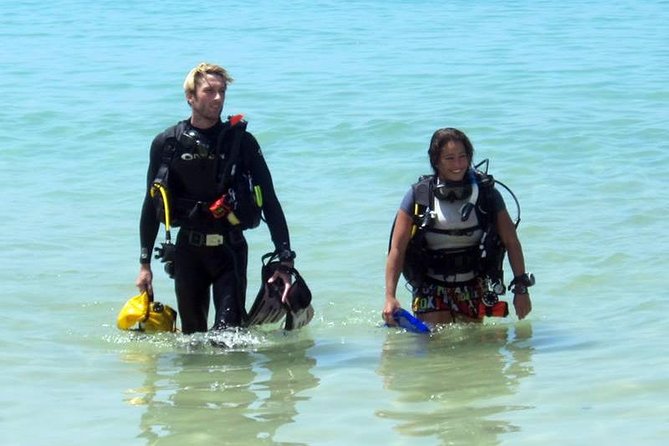
Phuket’s three-day open water course gives you a proper start in scuba rather than a quick trial session. You complete the classroom work online, then meet Charles at Kiwidiver Dive Centre for equipment training, pool practice, and four controlled beach sessions.
I like the small maximum group of four, which allows close attention when you are learning safety skills. I also like the clear progression from pool to sea, with time to repeat anything that does not feel right. The main drawback is the fixed schedule: you need reasonable fitness, comfort in the water, suitable weather, and enough time to avoid flying for 24 hours after the course.
In This Review
- Key points to know before booking
- Starting at Kiwidiver in Karon
- Complete the online theory before day one
- Day one: equipment fitting and pool practice
- Days two and three: four sessions from the beach
- Charles brings a calm, practical teaching style
- What the $503 price means
- Fitness, health, and flight planning
- Who will get the most from this Phuket course
- Booking and cancellation details
- Final verdict: a serious start for future scuba trips
- FAQ
- How long does the open water certification course take?
- Where does the course begin?
- How many people can join the course?
- What age do you need to be?
- Can I fly immediately after the course?
- What happens if bad weather cancels the course?
Key points to know before booking
- Three days from theory to certification: Complete e-learning before arrival, then handle practical training in Phuket.
- Four beach training sessions: The final two days focus on open water skills rather than a single introductory swim.
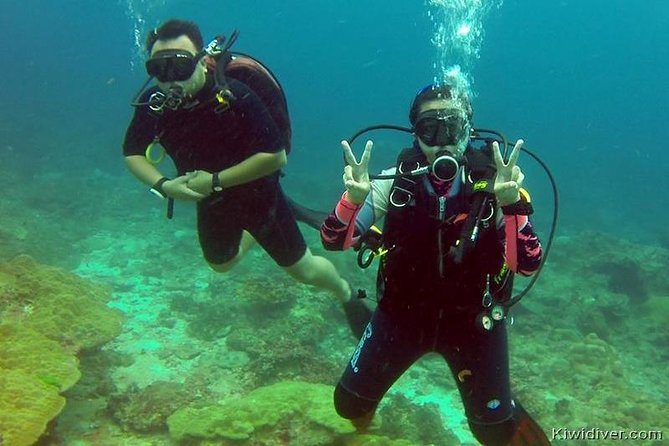
- Small groups of four or fewer: Charles can give close attention to equipment use, safety tasks, and confidence in the water.
- Pool practice comes first: You get a controlled setting to rehearse skills before heading into the sea.
- Karon meeting point: Meet at Kiwidiver Dive Centre, 20 Soi Lam Sai, at 9:00 am.
- Weather and health matter: Poor conditions can cause a date change or refund, and a health questionnaire is required.
Starting at Kiwidiver in Karon
Your course begins at Kiwidiver Dive Centre, located at 20 Soi Lam Sai in Karon. The stated start time is 9:00 am, and the activity finishes back at the meeting point each day.
The course is led by Charles, an instructor with experience dating back to 2000 and a background in diving around Phuket and other parts of the world. His teaching style is practical. He explains not only how to perform a task, but why it matters and how it relates to real situations.
That distinction is useful when you are new to scuba. Remembering a hand signal is one thing. Understanding what to do if your mask fills with water, a piece of equipment feels unfamiliar, or you need to stay calm underwater is much more valuable.
The small group limit is one of the strongest features here. With no more than four participants, you should have more room to ask questions and repeat a skill. This matters even more if you feel nervous. A large class can make a beginner feel hurried, while a small class gives the instructor a better chance to notice when you need extra help.
You should still arrive ready to participate. This is a certification course, not a sightseeing trip with a short lesson attached. Expect to listen, practice, follow instructions, and take responsibility for your own preparation.
More dive trips off Phuket:
- Full-Day Beginner Scuba Course with Private Tuition, Racha Yai
★ 5.0 · 368 reviews - Kata Beach Diving for Beginners Pool Training and 1 Beach Dive
★ 5.0 · 102 reviews - Discover Scuba Diving 3 Dives Racha Islands
★ 5.0 · 93 reviews
Complete the online theory before day one
The educational portion is completed through e-learning before you meet the instructor. That arrangement keeps the in-person schedule focused on practical work, but it also means you should not leave the online material until the last minute.
Before the first session, set aside enough time to work through the course content carefully. The online material covers the basic ideas you need to understand before handling equipment and entering the sea. If something is unclear, note it down so you can discuss it with Charles in person.
On day one, you review paperwork and go over any parts of the training material that need reinforcement. This is a useful checkpoint. You are not simply expected to finish the online work and instantly perform every skill. The instructor can clarify weak areas before you move on.
I especially like this blend of independent study and face-to-face teaching. You can learn the basic concepts at your own pace, then use class time for questions and practice. The tradeoff is that the course demands preparation. If you arrive without completing the e-learning, the practical schedule may not work as intended.
Day one: equipment fitting and pool practice
The first in-person day is devoted to getting ready for open water. After the paperwork and training review, you are fitted with scuba equipment and attend a pool training session.
Equipment fitting deserves more attention than a quick size check. A mask that does not fit well, fins that feel uncomfortable, or unfamiliar breathing equipment can distract you from the skills you are trying to learn. Ask questions early and speak up if anything feels wrong.
The pool is the right place to begin. It offers a more controlled setting than the beach, allowing you to become familiar with the equipment before dealing with open water. You practice the basic procedures required for certification and learn how the equipment feels while you are in the water.
This day may feel less exciting than the sea sessions, but it is probably the most important part for a first-time participant. The pool gives you space to build basic confidence. It also lets the instructor correct problems before they become stressful in the sea.
Do not judge the course by the amount of marine life you see on day one. The purpose is preparation. You are learning to manage equipment, follow instructions, and respond calmly. Those skills are the foundation of a safe experience.
Days two and three: four sessions from the beach
On day two, you meet at the beach for training sessions one and two. Day three brings sessions three and four, also from the beach.
The gradual structure is a sensible one. You are not asked to complete all your practical work in a single long day. Instead, you return to the water over two days, giving you a chance to adjust after the first session and arrive better prepared for the next.
The first beach sessions allow you to transfer your pool skills into open water. The setting is less controlled, so you need to pay closer attention to your instructor, your equipment, and your own comfort level. The point is not to rush toward scenery. The point is to show that you can use the required skills safely outside the pool.
The final two sessions give you more time to demonstrate the course requirements. If you found the first sea session challenging, the schedule provides another opportunity to practice. That is a real benefit for beginners, since confidence often improves through repetition rather than explanation alone.
The supplied course information does not promise a particular beach, depth, visibility, or list of animals. You might encounter Phuket’s marine life in its natural setting, but conditions can vary. Treat the wildlife as a bonus, not the main reason to book a certification course.
Some accounts connected with Kiwidiver describe as many as six sea sessions on a different open water program. Do not assume that number applies to this specific beach course. The advertised structure here is four beach training sessions across days two and three.
A different kind of day out from Phuket:
- Phang Nga Bay Sea Cave Canoeing & James Bond Island by Big Boat
★ 5.0 · 4,666 reviews - Phuket: Elephant Jungle Sanctuary Ethical Feeding Experience
★ 4.8 · 4,359 reviews - From Phuket: Phang Nga Bay and Canoeing Tour by Big Boat
★ 4.7 · 3,528 reviews - Phi Phi Islands Adventure Day Trip w/ Seaview Lunch by V. Marine
★ 5.0 · 3,295 reviews
Charles brings a calm, practical teaching style
Charles is the person most likely to shape your experience. His background includes instruction since 2000 and extensive time around Phuket’s underwater locations. He is also described as having worked around the world and having a military background in the United Kingdom.
What matters most to you is how that experience appears in class. Charles focuses on the reasons behind each procedure, not just the steps. That can make technical material easier to remember, especially if you are the kind of learner who wants to understand the point of a rule.
He also places emphasis on helping beginners feel safe. That does not mean the course removes every challenge. It means you have an instructor who can guide you through the process instead of leaving you to figure out unfamiliar equipment and procedures on your own.
The private or very small-group setup can be particularly useful for families. Children aged 10 and older may qualify, but anyone under 18 must be supervised by a parent, and that parent must join the scuba activity. A parent cannot simply drop off a young participant and leave.
What the $503 price means
At $503, this is a major activity expense, especially if you are traveling on a tight Thailand budget. The value comes from the training and certification rather than from a single recreational outing.
You are paying for a structured three-day course, instructor time, equipment fitting, pool practice, four beach sessions, and certification if you successfully complete the requirements. You also receive a log book and open water certification at the end.
That makes the price easier to justify if you plan to scuba again. An internationally recognized certificate can give you access to future programs and locations, subject to each operator’s rules. If this is a one-time holiday experiment, the cost may feel high compared with a short introductory session.
The small group size improves the value. A maximum of four participants means your instruction should be more personal than in a crowded class. It is also a better fit if you need extra explanations or prefer not to learn a new skill in front of a large group.
The course is not the best choice if you mainly want a relaxed day at sea. Certification involves study, skills practice, and assessments. You should book it because you want the qualification and the foundation it provides, not simply because Phuket offers attractive marine life.
Fitness, health, and flight planning
You need a moderate level of physical fitness and should be comfortable in the water. The course is not described as suitable for someone who is unable to swim comfortably or who struggles with basic water confidence.
You also complete a health questionnaire before entering the water. Certain medical conditions, including asthma and heart problems, may prevent participation. If you have any medical concern, consult your doctor before booking rather than waiting until the first morning.
The flight rule needs careful planning. Scuba activity within 24 hours of flying is not recommended. Schedule the course early enough in your Phuket stay to leave a full 24-hour gap before your departure flight.
Weather is another practical concern. The course requires good conditions. If poor weather forces cancellation, you can choose a different date or receive a full refund. This protects your money, but it can still disrupt a tightly planned holiday, so leave some flexibility around the three course days.
Who will get the most from this Phuket course
This course suits you if you want a recognized qualification and are prepared to spend three days learning properly. It is also a strong option if you prefer patient instruction, small groups, and a clear progression from theory to pool work to the sea.
Families can consider it for children aged 10 and older, provided a parent joins and supervises any participant under 18. The course may work well for a parent and child who want to learn together, but both need to meet the health and fitness requirements.
Solo participants can benefit from the small group limit, particularly if you want focused time with the instructor. One account describes a personal three-day session with Charles, which suggests the format can feel especially attentive when bookings are light.
This is less suitable for you if your holiday schedule allows only one free day, if you dislike advance study, or if you are uncomfortable in the water. It is also a poor match if you must fly immediately after the course.
Booking and cancellation details
Confirmation arrives within 48 hours of booking, subject to availability. The activity uses a mobile ticket, so keep the booking information accessible on your phone.
You can cancel for a full refund up to 24 hours before the local start time. Cancellations or changes made inside that window are not accepted and are not refunded. Since the course runs across three days, check the dates carefully before confirming.
The meeting point is both the start and end point. Plan to arrive before 9:00 am so you are ready for paperwork and equipment preparation rather than beginning the day in a rush.
Final verdict: a serious start for future scuba trips
I would recommend this course if you want to become a certified scuba diver in Phuket and value close instruction over a quick holiday activity. The strongest reasons to book are the small group limit, the pool preparation, the four beach sessions, and Charles’s long teaching experience.
The $503 cost is fair for a three-day certification program, though it is not a bargain for someone who only wants a brief underwater introduction. Check your health, leave 24 hours before flying, and keep your schedule flexible for weather.
Book it if you want a qualification you can use beyond this trip. Skip it if you are looking only for a casual sea outing or cannot commit to the study and practical work.
FAQ
How long does the open water certification course take?
The course takes approximately three days. E-learning is completed in advance, followed by paperwork, equipment fitting, and pool training on day one, then four beach training sessions across days two and three.
Where does the course begin?
The meeting point is Kiwidiver Dive Centre, 20 Soi Lam Sai, Tambon Karon, Phuket 83100, Thailand. The stated start time is 9:00 am, and the activity ends back at the meeting point.
How many people can join the course?
The maximum group size is four participants. This allows for a small-group training format with more direct attention from the instructor.
What age do you need to be?
Participants must be at least 10 years old. Anyone under 18 must be supervised by a parent, and the parent must join the scuba activity.
Can I fly immediately after the course?
Scuba activity within 24 hours of flying is not recommended. Plan your departure so you have at least a 24-hour gap after the course.
What happens if bad weather cancels the course?
If poor weather causes cancellation, you will be offered another date or a full refund. You can also cancel for a full refund if you do so at least 24 hours before the experience start time.
Just added around Phuket
- Fishing Day trip with Lunch★ 3.0 · 5 reviews
- EFoil Lessons in Phuket Thailand★ 5.0 · 5 reviews
- Racha Noi and Racha Yai Dive Trip from Phuket★ 4.5 · 5 reviews
- Phuket: Guided Walk Tour to Elephant Sanctuary with Transfer★ 4.8 · 5 reviews
- Full-day Tour to the Similan Islands by Speedboat from Khao Lak★ 3.5 · 5 reviews
- Private Phi Phi Early Bird Premium Tour★ 4.0 · 5 reviews
- Phuket Old Town: Authentic Thai Costume Cultural Experience★ 3.1 · 5 reviews
- Authentic Thai Cooking Class by Suuko Wellness Spa★ 3.5 · 5 reviews
Scuba Diving, compared.
Full-Day Beginner Scuba Course with Private Tuition, Racha Yai
Read our review →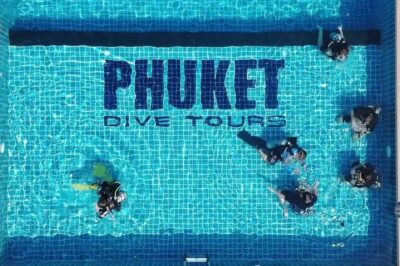
Kata Beach Diving for Beginners Pool Training and 1 Beach Dive
Read our review →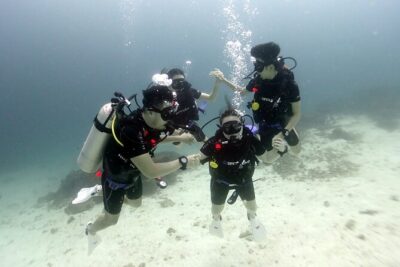
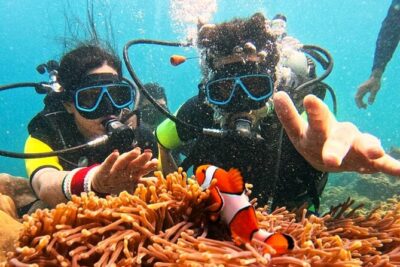
Phuket Scuba Diving: Racha Island Or Maiton Island For All Levels
Read our review →
Scuba Diving in Phuket – Full-Day Trip (3 Dives, All Included)
Read our review →
Premium Guided Scuba Diving Day Trip for Certified Divers
Read our review →Browse the lists this tour appears in