

Reviewed · PHUKET ELEPHANT SANCTUARY VISITS
Walk and Feed at Bukit Elephant Park Phuket
Bukit Elephant Park builds its visit around a simple idea: let elephants behave like elephants. You watch them from a safe distance, feed them from behind a fence, and learn about their rescue stories without riding, bathing, loud noise, or forced tricks. The rice balls mixed with fruit are a nice touch, since you get to prepare food and offer it directly to an elephant’s mouth.
I like the welfare-first approach and the chance to see natural behavior rather than a staged performance. I also like the Thai culture activities, especially rubber tapping, making coconut milk, and learning about Thai food. The main thing to check before booking is the location: the experience name says Phuket, while the supplied booking information lists Ko Phi Phi Don. Confirm the pickup area and meeting point carefully.
In This Review
- Key details before you book
- A quieter way to meet elephants
- What happens during the 90-minute visit
- Feeding from behind the fence
- Why the no-riding policy matters
- Thai culture gives the outing more depth
- Getting there and choosing a session
- What to bring, and what not to expect
- Is $51.92 good value?
- Who should book Bukit Elephant Park?
- Should you book it?
- FAQ
- How long does the Bukit Elephant Park experience last?
- Is hotel pickup included?
- Is elephant riding included?
- Can I bathe with the elephants?
- How do I feed the elephants?
- What food is provided for the elephants?
- Are drinks included?
- Can I bring a stroller?
- What are the photography rules?
Key details before you book
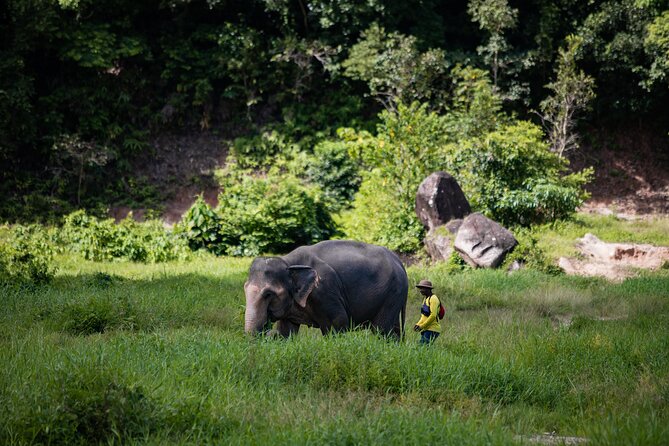
- Safe feeding from behind a fence: You can offer bananas and fruit-filled rice balls while guides and mahouts supervise closely.
- No riding or bathing: The program avoids two activities that can cause stress or raise welfare concerns.
- Thai culture beyond the elephants: Rubber tapping, coconut milk preparation, and Thai cooking add local context to the visit.
- About 90 minutes on site: Morning, late-morning, and afternoon sessions are offered, with the exact program described as a mini guided tour.
- Shared air-conditioned transfer: Hotel pickup is offered, but the transfer is joined rather than private.
- Quiet park rules: No loud noise, drones, or flash photography are allowed, so bring a calm attitude and a phone or camera that works without flash.
A quieter way to meet elephants

The strongest part of this experience is its restraint. You are not promised a ride, a swim, or a close-contact photo session at every turn. Instead, the elephants are allowed to walk freely through the park, while you observe them under the direction of a guide and professional mahout.
That matters because elephant tourism can be confusing. A program may advertise closeness while hiding the pressure used to make an animal stand still, perform, or accept constant touching. Bukit Elephant Park takes a different route. Physical and verbal violence are not allowed, and the rules are designed to protect both the elephants and the people around them.
You should expect contact to be limited. You can feed the elephants at designated areas, but a fence remains between you and the animals. The staff stays nearby to show you how to offer the food correctly. This is not the right outing if you want to hug an elephant or wash one in a river. It is a better fit if watching, learning, and feeding feel like enough.
The setting is intended to be peaceful. No loud noises are allowed, and drones and flash photography are prohibited. Those rules can feel strict if you are hoping to film every moment, but they help keep the visit calmer for the animals.
More elephant sanctuary visits:
- Phuket: Elephant Jungle Sanctuary Ethical Feeding Experience
★ 4.8 · 4,359 reviews - Phuket: Elephant Sanctuary Guided Tour with Hotel Transfers
★ 4.8 · 2,020 reviews - A Morning with the Elephants at Phuket Elephant Sanctuary
★ 5.0 · 1,693 reviews
What happens during the 90-minute visit
The experience is listed as approximately one hour and 30 minutes, although the available time blocks run from two hours: 9:00 to 11:00, 11:00 to 13:00, and 14:00 to 16:00. That extra window may account for arrival, instructions, transfers within the park, or the pace of the group. Treat the session as a short guided program, not an all-day excursion.
Your visit begins with an introduction to the elephants and the park’s approach. The guide explains their habits, history, and rescue stories, while the mahout helps manage the animals and keeps the feeding process orderly.
This opening is more useful than it may sound. If you know how elephants behave, you can watch with more sense of what you are seeing. You also learn why the park keeps distance, limits noise, and avoids activities such as riding and bathing.
The elephants are then observed in their surroundings. The key point is patience. You are there to watch natural behavior, not to make the animals pose on command. Depending on where the elephants are and what they are doing, your best moments may come while they are simply walking, eating, or interacting with their surroundings.
After observation, you receive a basket of bananas for feeding. The feeding area has a fence between you and the elephants, and staff members remain close. You offer the food as instructed, allowing the elephant to reach with its trunk.
This is an easy activity for most people, but you still need to pay attention. Do not make sudden movements, shout, or try to push food toward an elephant without guidance. The rules are there for a reason, and following them makes the encounter safer and more relaxed.
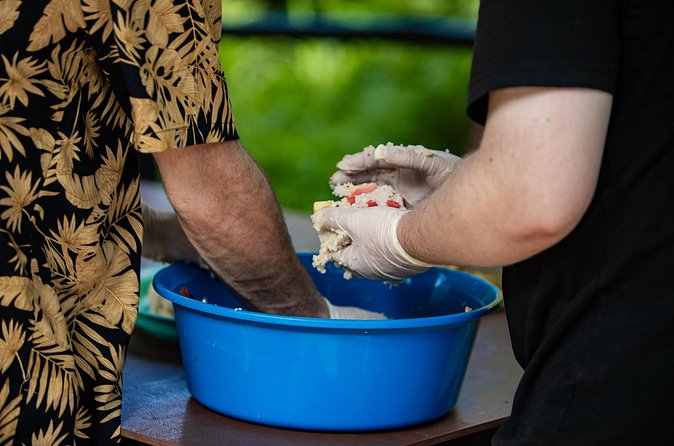
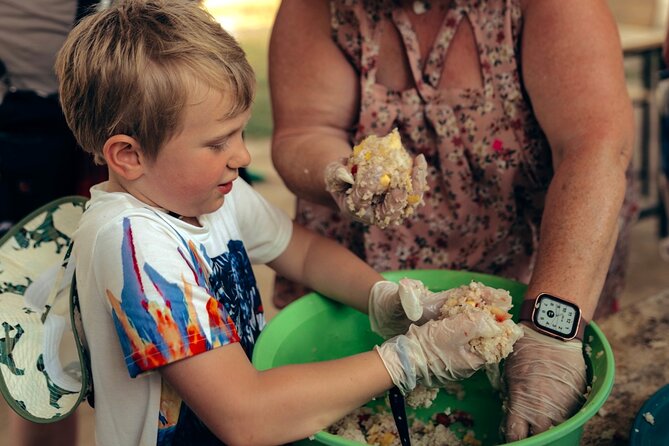
One of the more memorable parts is preparing rice balls mixed with the elephants’ favorite fruits. You then feed these to the elephants in their mouths. It gives you a small hands-on role without turning the experience into a physical-contact session.
The cultural portion may include rubber tapping, making coconut milk, and Thai food cooking activities. The supplied details do not set out exactly how long each activity lasts or whether every session follows the same order, so expect these elements to be part of the program rather than a full cooking class.
Still, they add value. You are not simply arriving at a feeding pen, taking a few pictures, and leaving. Rubber tapping connects the visit to rural work in Thailand. Coconut milk and food preparation show how everyday ingredients are used in Thai cooking. These activities also give you something to do while the elephants move at their own pace.
Traditional Thai coffee or tea is included. It is a small extra, but a welcome one, especially during a morning session. The drink offers a simple pause between the cultural activities and the elephant encounter.
Feeding from behind the fence
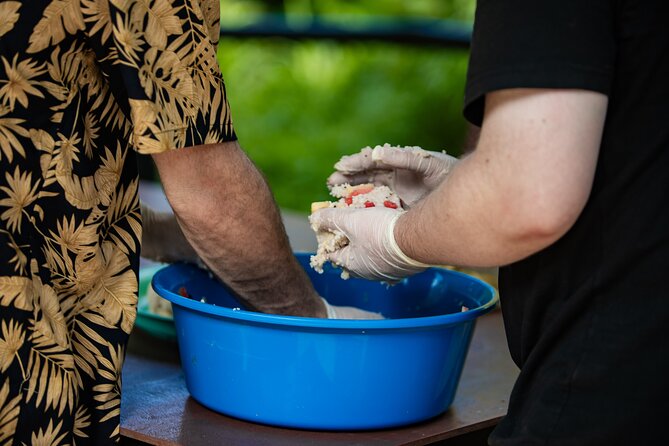
The feeding setup is likely to shape your opinion of the park. You do not walk freely among the elephants or handle them without a barrier. Instead, you stand in a designated safe area and pass food across the fence under staff supervision.
Some people may find this less exciting than a close-contact program. I see it as a sensible trade-off. The fence gives the elephant room and gives you a clear boundary. You can still see the trunk reach for bananas, watch the animal take food from your hand, and prepare the fruit rice balls.
The feeding process also provides the best photo opportunities. The park lists unforgettable photo moments as part of the experience, but remember the photography rules. Flash is not allowed, and drones are banned. If you use a phone, keep it steady and quiet rather than waving it close to the animals.
The chance to watch elephants take food with their trunks is a highlight. It is direct and memorable, yet it does not require a ride or a bathing session. You should not expect every elephant to behave on cue. That unpredictability is part of an animal-focused visit.
Why the no-riding policy matters
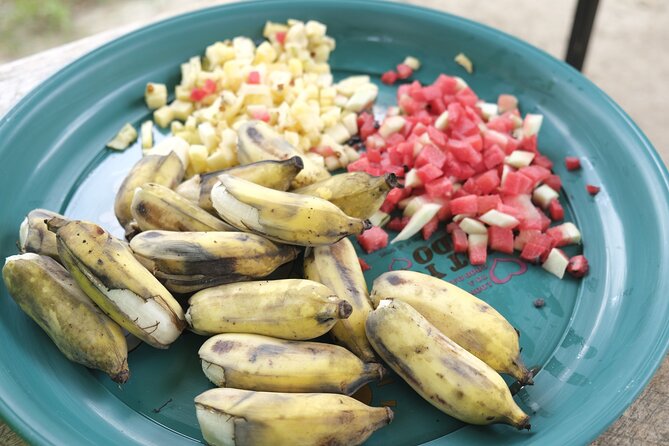
Bukit Elephant Park clearly excludes elephant riding and bathing. It also says that elephants can walk freely in the park without disruption from visitors.
For you, this means the program may feel less action-packed than standard elephant attractions. There is no saddle, no river bathing, and no promise of prolonged touching. The payoff is a calmer activity with fewer forced interactions.
The park also prohibits physical or verbal violence toward the elephants. Guides and mahouts are present throughout the feeding activities, and the staff’s role is not just to explain what you are doing. They help control the pace and protect the boundaries around the animals.
If your priority is ethical wildlife tourism, these policies are important. They do not turn a short visit into a complete answer to every question about captive elephants, but they do tell you what kind of encounter the park is offering. You are supporting a place that presents itself as a rescue and care facility, and part of your visit helps that work continue.
A few more Phuket trips worth weighing up
- Phuket:Beach walk with elephants, rain & care. 2.5 hours
★ 4.9 · 969 reviews - Phuket: Bukit Elephant Park Sanctuary Walk and Feed Tour
★ 4.9 · 926 reviews - World B+ (Zipline 18 Platforms + Roller + Sky Walk with World Set Menu )
★ 5.0 · 218 reviews - World A+ (Zipline 32 Platforms + Roller + Sky Walk with World Set Menu )
★ 5.0 · 215 reviews
Thai culture gives the outing more depth
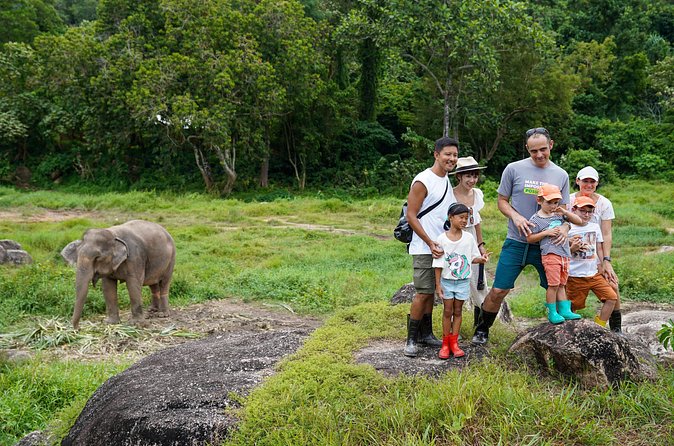
The elephant portion is the main reason to book, but the cultural activities help justify the price. At $51.92 per person, this is not the cheapest way to spend 90 minutes in Thailand. The included transfer, guide, drinks, elephant food, and cultural demonstrations make the price easier to assess.
Rubber tapping is especially useful because it gives you a view of an important traditional activity rather than another generic photo stop. Making coconut milk provides a practical link to Thai kitchens. The cooking session may appeal to you if you like understanding how food is made, not just eating it.
Do not expect a large museum-style presentation or a long formal class. The information describes a short guided program, so these activities are likely compact. Their value comes from variety. You get animal welfare information, Thai customs, food preparation, and a drink within the same visit.
The English and Thai guide can explain the program to an international audience, while the mahouts provide hands-on support around the elephants. No guide names are provided, so do not book expecting a specific host.
Getting there and choosing a session
Pickup is offered from your hotel in a joined, air-conditioned vehicle. That is useful in hot or wet weather, but a shared transfer can take longer than a private car because other pickups may be involved.
The location needs special attention. The experience is called Walk and Feed at Bukit Elephant Park Phuket, but the supplied location says Ko Phi Phi Don. Those are not interchangeable bases, so check the exact pickup zone, meeting instructions, and travel time before paying. This is the single most important practical detail to verify.
You can choose among three listed time periods:
- 9:00 to 11:00
- 11:00 to 13:00
- 14:00 to 16:00
The morning may suit you if you prefer cooler conditions and want to keep the rest of the day open. The afternoon works well if your schedule is tight earlier in the day. The supplied information does not promise different elephant behavior or different cultural activities by time slot.
The tour has a maximum of 30 people. That is not a tiny private group, and the feeding area may feel busy when everyone gathers. Staff supervision and the fence help keep the activity organized, but you should not expect personal attention every second.
What to bring, and what not to expect
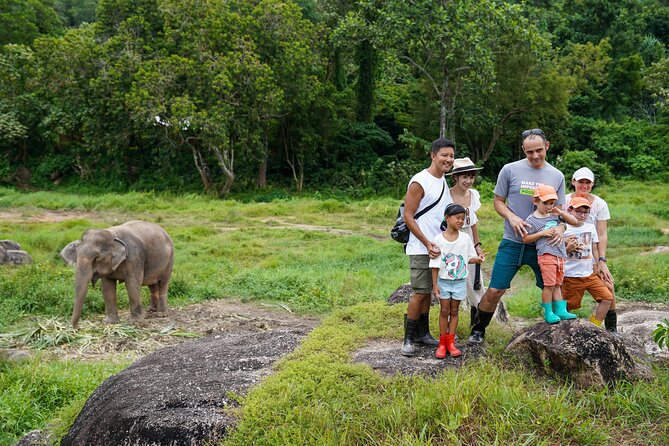
Bring sun protection, insect repellent, and a hat if you need them. These are not included. Mosquito spray is also listed as optional, which tells you that outdoor conditions can be part of the visit.
During the rainy season, boots and umbrellas are provided. You may want to bring your own socks, since socks for rainy weather are not included. Sturdy, comfortable footwear is sensible outside the wet season as well.
A stroller is not allowed in the park. If you are visiting with a baby, bring a baby carrier instead. The activity states that most people can participate, but the park’s walking surfaces, weather, and no-stroller policy may make it less convenient for families with very young children.
Keep your camera quiet and turn off the flash. Leave drones at your accommodation. The park does not permit loud noise, so this is not the place for a portable speaker, noisy games, or a large amount of animated activity around the elephants.
Is $51.92 good value?
The price makes the most sense when you want several elements in one compact outing. You receive a guide, joined hotel transfer, bananas, traditional coffee or tea, rain equipment when needed, elephant observation, supervised feeding, and Thai culture activities.
If you only want to hand an elephant a banana, you may find the cost high for a short visit. If you value the rescue setting, the welfare rules, the included transport, and the added cultural activities, the package offers a fuller experience.
The 100 percent recommendation rate and five-star score across 25 ratings point to strong satisfaction, especially with the respectful format, the elephant rescue stories, and the chance to feed the animals. Those points match the design of the program: no riding, no bathing, and no harmful entertainment.
I would judge the value by your priorities. Ethical animal contact, simple cultural learning, and easy transport make the price reasonable. A private experience, extensive time with the elephants, or a large hands-on cooking lesson would require a different type of tour.
Who should book Bukit Elephant Park?
This outing suits you if you want a short, organized introduction to elephant welfare. It is also a good match for people who prefer observation and supervised feeding over riding or bathing.
Families can consider it, but remember that strollers are not allowed and a baby carrier is recommended. People with limited time may appreciate the short format, while photographers should be comfortable working without flash or drones.
You may want to skip it if your main goal is close physical contact. The fence, quiet rules, and free-walking policy are central to the experience, not minor restrictions. You should also confirm the location before booking, since the Phuket name and Ko Phi Phi Don location do not match.
Free cancellation is available if you cancel at least 24 hours before the local start time. Cancellations or changes made within 24 hours are not accepted for a refund.
Should you book it?
Book this experience if you want elephants treated as animals rather than props. The strongest reasons are the no-riding and no-bathing policy, the supervised feeding, and the rescue and welfare explanations from the guide and mahouts.
The Thai culture activities make the short visit feel more rounded, and the air-conditioned shared pickup adds convenience. Just keep your expectations realistic: this is a quiet, controlled encounter, not a free-roaming walk among elephants.
Before booking, confirm that the pickup and park location work with your itinerary. If they do, Bukit Elephant Park is a thoughtful choice for a respectful elephant visit with a useful taste of Thai rural culture.
FAQ
How long does the Bukit Elephant Park experience last?
The visit lasts approximately one hour and 30 minutes. The available time blocks are 9:00 to 11:00, 11:00 to 13:00, and 14:00 to 16:00.
Is hotel pickup included?
Yes. A joined transfer in an air-conditioned vehicle is provided from your hotel.
Is elephant riding included?
No. Elephant riding is not offered as part of this experience.
Can I bathe with the elephants?
No. Bathing with elephants is not included or offered.
How do I feed the elephants?
You feed them at designated safe feeding areas with a fence between you and the elephants. Guides, mahouts, and staff stay nearby to show you how to feed them safely.
What food is provided for the elephants?
A basket of bananas is included. You also prepare rice balls mixed with fruit and feed them to the elephants in their mouths.
Are drinks included?
Yes. Traditional Thai coffee or tea is included.
Can I bring a stroller?
No. Strollers are not allowed in the park. A baby carrier is recommended instead.
What are the photography rules?
Flash photography and drones are not allowed. The park also prohibits loud noise to avoid disturbing the elephants.
Just added around Phuket
- Fishing Day trip with Lunch★ 3.0 · 5 reviews
- EFoil Lessons in Phuket Thailand★ 5.0 · 5 reviews
- Racha Noi and Racha Yai Dive Trip from Phuket★ 4.5 · 5 reviews
- Phuket: Guided Walk Tour to Elephant Sanctuary with Transfer★ 4.8 · 5 reviews
- Full-day Tour to the Similan Islands by Speedboat from Khao Lak★ 3.5 · 5 reviews
- Private Phi Phi Early Bird Premium Tour★ 4.0 · 5 reviews
- Phuket Old Town: Authentic Thai Costume Cultural Experience★ 3.1 · 5 reviews
- Authentic Thai Cooking Class by Suuko Wellness Spa★ 3.5 · 5 reviews
Phuket Elephant Sanctuary Visits, compared.
Elephant Jungle Sanctuary Ethical Feeding Experience
Read our review →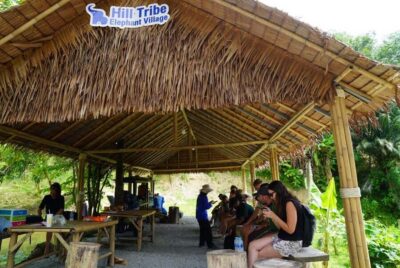
Elephant Sanctuary Guided Tour with Hotel Transfers
Read our review →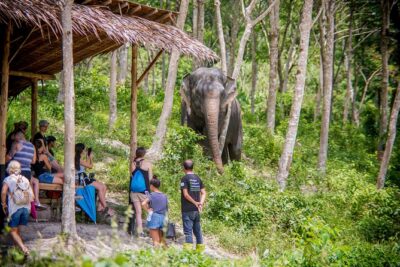
A Morning with the Elephants at Phuket Elephant Sanctuary
Read our review →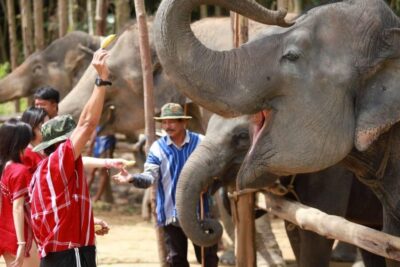
Elephant Experience with Lunch or Dinner and Pickup
Read our review →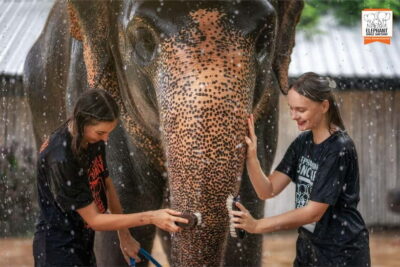
Elephant Jungle Sanctuary Feed and Shower Trip
Read our review →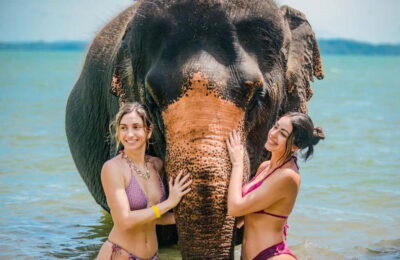
Beach walk with elephants, rain & care. 2.5 hours
Read our review →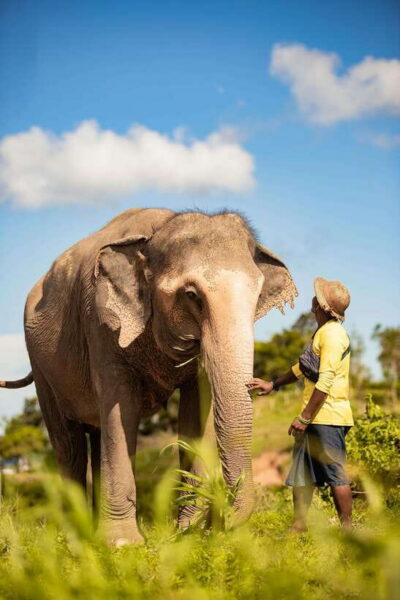
Bukit Elephant Park Sanctuary Walk and Feed Tour
Read our review →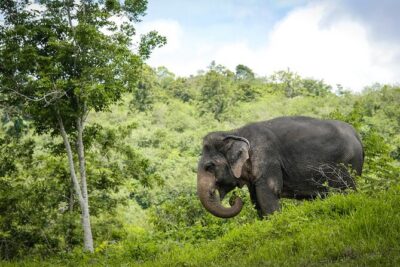
Browse the lists this tour appears in