
Reviewed · PHUKET ELEPHANT SANCTUARY VISITS
Phuket Elephant Nature Reserve Ethical Sanctuary
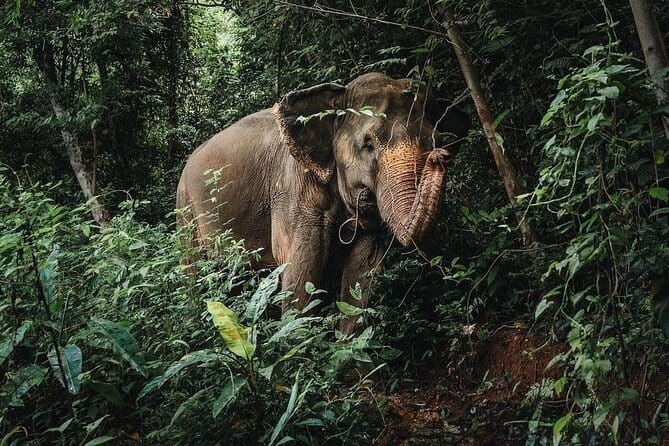
The best thing here is also the point: you do not bathe, ride, touch, or hand-feed the elephants. Instead, you watch them move freely, prepare food with the mahouts, and learn why forced contact is harmful. That makes this feel like an animal-welfare visit, not a photo opportunity dressed up as a sanctuary.
I like the close views at the jungle and watering holes, and I like that the education is practical. You see what the elephants eat, help make vitamin balls, and learn how dung is recycled. The Thai cooking class and lunch add real value to the half-day outing.
The main consideration is the heat. Phuket can be hot and humid, and the longer program may feel tiring, especially if you prefer a quick animal encounter. Comfortable shoes, a hat, sunglasses, and a refillable bottle will make the visit easier. Transport is not included.
In This Review
- Key points to know before you book
- Why the hands-off rule matters in Phuket
- Arriving at the reserve and getting the briefing
- Preparing elephant food with the mahouts
- Watching elephants in the jungle and at water ponds
- Learning the sanctuary’s elephant-care philosophy
- Seeing the elephant dung recycling center
- The Thai cooking class and lunch
- Is $39.11 good value?
- What to bring and how to handle the heat
- Who will enjoy this sanctuary most?
- Should you book the Phuket Elephant Nature Reserve?
- FAQ
- How long does the Phuket Elephant Nature Reserve experience last?
- Can I touch or bathe the elephants?
- Can I feed the elephants directly?
- Is lunch included?
- Is transportation included?
- What should I bring?
- Can I cancel for a full refund?
Key points to know before you book
- Hands-off elephant care: You can watch the elephants nearby, but touching, bathing, and direct hand-feeding are not part of the program.
- A real half-day program: The visit combines elephant observation, food preparation, dung recycling, a Thai cooking class, and lunch.
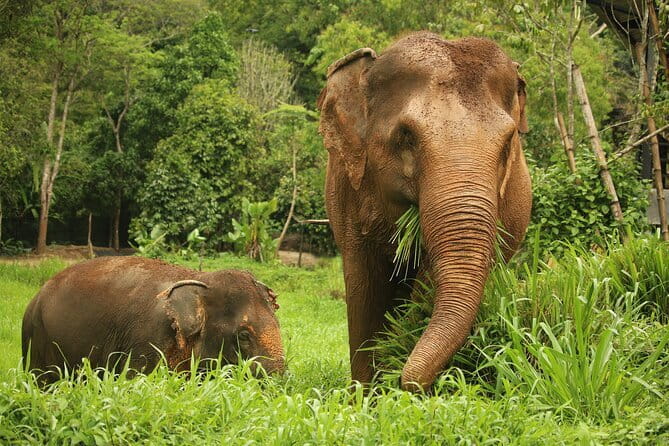
- Natural behavior comes first: The elephants roam in jungle areas and use natural water ponds rather than performing set tricks.
- Useful food activity: You prepare vitamin balls and help prepare fruit and other food, then watch the elephants eat.
- Good family lesson: Children can see why riding and bathing programs cause harm while taking part in a safe food-making activity.
- Bring your own transport plan: The sanctuary provides the experience, guide, water, and insurance, but not transportation.
Why the hands-off rule matters in Phuket
Many elephant attractions sell closeness as the main event. You sit on an elephant, scrub its back in a river, or feed it directly from your hand. Those activities can look gentle, but they often require animals to tolerate repeated human contact and strict control.
At Phuket Elephant Nature Reserve, the operating rule is different. The elephants are rescued animals who may have grown up around people and cannot simply be released into the wild. They are cared for in a spacious natural setting, with their comfort placed ahead of entertainment.
You still get close enough to watch and photograph them. The difference is that the elephant decides how near to come, while the mahouts follow and supervise. You are not asked to pose beside an animal or make it perform.
I find this approach more honest. You leave with a better understanding of elephant welfare, rather than the mistaken idea that an elephant enjoys being washed, ridden, or constantly touched by strangers.
More elephant sanctuary visits:
- Phuket: Elephant Jungle Sanctuary Ethical Feeding Experience
★ 4.8 · 4,359 reviews - Phuket: Elephant Sanctuary Guided Tour with Hotel Transfers
★ 4.8 · 2,020 reviews - A Morning with the Elephants at Phuket Elephant Sanctuary
★ 5.0 · 1,693 reviews
Arriving at the reserve and getting the briefing
The visit begins with an introduction to the reserve and a briefing on how to behave around the elephants. This first talk is important, since the experience depends on patience and distance rather than a queue of hands-on activities.
Your guide explains the sanctuary’s work and the history of rescued elephants in Thailand. Guides named Tom, Steve, and Dong have received especially warm praise for making the information clear and keeping the mood friendly, but your guide will depend on the date and group.
Expect a calm, organized visit rather than a large entertainment show. The reserve has clean facilities, clean bathrooms, and a gift shop, all useful details during a hot half-day outing. Water is provided, and there is a refill station if you bring your own bottle.
The site allows service animals, is near public transportation, and says most people can participate. The published information does not give a detailed route or mobility assessment, so you should ask the operator directly if you have specific access needs.
Preparing elephant food with the mahouts
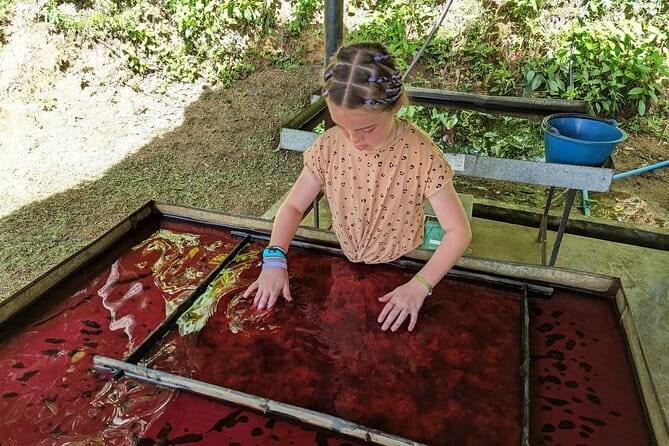
One of the most engaging parts is food preparation. You help prepare fruit and make vitamin balls with the mahouts, the elephant handlers who care for the animals.
This gives you something useful to do without turning the elephants into props. You can see the food before it reaches them, learn why certain ingredients are used, and watch the animals respond in their own way.
The wording around feeding is worth understanding. You prepare food for the elephants, but the experience follows a hands-off approach. Direct hand-feeding is not permitted, even though some descriptions use the phrase meet and feed. In practice, you should expect to make the food and observe it being offered, not hold food out to an elephant.
That rule may disappoint anyone hoping for a trunk-in-your-hand photograph. For me, it is one of the strongest parts of the program. You get an activity that involves the animals without encouraging them to crowd around people on command.
The elephants may be calm and close, but they are still large, powerful animals. Following instructions, staying with the group, and letting the mahouts manage distance are essential.
Watching elephants in the jungle and at water ponds
The reserve’s central attraction is simply watching elephants behave like elephants. You may see them walking through the jungle, pausing near water, eating, or moving between areas with their caretakers nearby.
The natural water ponds are especially useful for photography and observation. You are not bathing with the elephants, and they are not being scrubbed for your entertainment. Instead, you watch them use the water on their own terms.
This can feel quieter than a standard elephant park. There are no tricks, rides, or scheduled bathing session to fill every minute. You may see fewer animals than at a large commercial attraction, but that is part of the point. The reserve focuses on a limited number of rescued elephants and gives them room.
The program has been praised for showing four or five elephants, though the exact number you see may vary. Animals move freely, so there is no promise that every elephant will appear at a particular spot. That unpredictability is a virtue from an animal-welfare point of view, but it means you should not expect a guaranteed close-up pose.
Rain can change the mood in a good way. During wet weather, elephants may become more active around the water, and the jungle setting can feel especially atmospheric. You should still bring protection from rain if the forecast calls for it, since the program continues in changing weather.
A few more Phuket trips worth weighing up
- Phuket: Elephant Nature Reserve Entry Ticket and Guided Tour
★ 4.9 · 223 reviews - Exploring Phang Nga Bay national park with Lunch and Dinner
★ 5.0 · 48 reviews - Khao Sok National Park & Samet Nangshe Private Tour from Phuket
★ 4.5 · 23 reviews - Jungle Trip to Khao Sok National Park
★ 5.0 · 16 reviews
Learning the sanctuary’s elephant-care philosophy
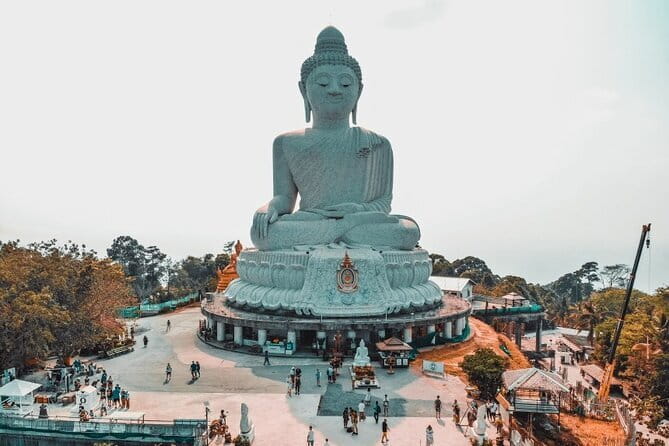
The education here is not an extra lecture added to the side of the tour. It explains why the visit has been designed this way.
You learn about rescued elephants and the problems created by riding, bathing, and forced physical interaction. The lesson is particularly useful if you are comparing several Phuket elephant experiences. A program that advertises bathing may seem more exciting, but this visit asks you to consider what the animal must endure to allow that contact.
For children, the message can be clear without being grim. Young visitors can prepare food, watch elephants walk and eat, and understand that caring for an animal sometimes means giving it space. Families with children around school age have found the half-day format suitable, though you should be ready for heat and a fairly full schedule.
The approach also helps adults make a more informed choice for future trips. Once you understand why riding and bathing are not harmless, it becomes easier to recognize the difference between a genuine sanctuary and a commercial attraction using the word ethical as a sales label.
The reserve describes itself as ethical, and its stated rules support that claim: no riding, no bathing, no touching, and no direct hand-feeding. No outside label can guarantee every detail of animal care, so I would still pay attention to how staff handle the elephants during your visit. Based on the program structure, the animal’s freedom of movement is clearly the central idea.
Seeing the elephant dung recycling center
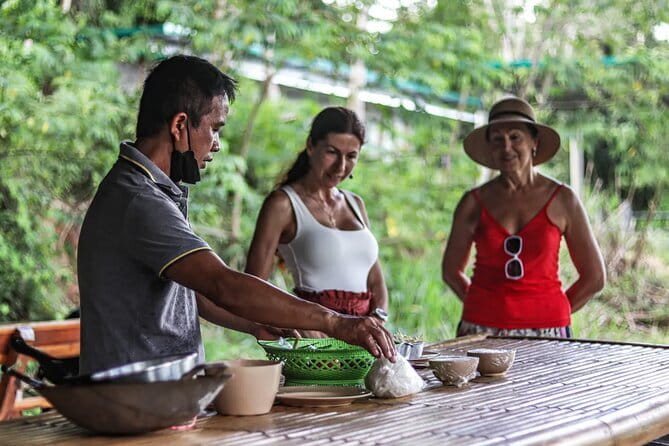
The dung recycling center is an unusual but worthwhile stop. It shows how the reserve turns a basic byproduct of elephant care into something useful rather than treating it as waste.
This part may not sound as photogenic as the elephants, but it adds substance. A sanctuary needs food, land, staff, cleaning, and ongoing care. Recycling materials helps show the practical work behind the peaceful jungle setting.
I like this stop because it removes some of the glossy fantasy from the word sanctuary. Caring for elephants is daily work. There are not only beautiful animals and quiet ponds, but also food preparation, waste management, cleaning, and operating costs.
The dung section may be less exciting for very young children, especially after time in the heat. Still, it is brief, educational, and a useful reminder that responsible animal care involves the unglamorous jobs too.
The Thai cooking class and lunch

The half-day program includes a Thai cooking demonstration and lunch. The class usually fits into the schedule alongside the elephant activities, and you prepare the meal you later eat.
This is a smart addition. It gives you a break from the sun, adds a cultural element, and makes the three-and-a-half-hour visit feel like a complete outing rather than a short viewing session with extras attached.
The cooking portion has been described as fun, and the meal as very good. The supplied details do not list the exact dishes, so do not book this expecting a particular curry or recipe. Think of it as a simple Thai food lesson connected to lunch.
If you are deciding between a shorter elephant visit and the half-day program, the cooking class is the strongest reason to choose the longer option. You get more than animal observation, and the meal can help justify the extra time and cost.
Still, check the schedule when you book. Some descriptions of this experience refer to a 90-minute visit, while the program described here is the half-day version of about three hours and 30 minutes. The shorter option may suit you better if Phuket’s heat is a concern, while the half-day version gives you the fullest set of activities.
Is $39.11 good value?

At $39.11 per person, this is a reasonable price for a half-day program that includes the guide, water, insurance, elephant food preparation, dung recycling visit, Thai cooking class, and lunch.
The value is not in the number of entertainment activities. You are paying for a quieter experience, a guided lesson in elephant welfare, and support for a sanctuary that cares for rescued animals. If your priority is touching an elephant or getting a bathing photograph, you may feel the program gives you less for your money.
If you want an animal encounter that does not reward forced contact, the price is easier to defend. The cooking class and meal also make the cost more practical than a short observation-only visit.
The program is booked frequently, and availability may matter during busy periods. Free cancellation is offered up to 24 hours before the start time for a full refund. Cancellations or changes made inside 24 hours are not accepted for a refund, and the cut-off uses Phuket local time.
What to bring and how to handle the heat
The reserve does not include comfortable shoes, a hat, sunglasses, or your own water bottle. Bring all four if you can.
Wear shoes suitable for walking around a natural outdoor site. The exact surface is not specified, so a comfortable pair with good grip is a sensible choice. Light clothing, sun protection, and insect repellent would also be practical, though only the first items are specifically listed by the operator.
A refillable bottle is useful because water is provided and a refill station is available. You can reduce plastic waste while keeping hydrated.
Plan your energy. The full program lasts about three and a half hours, and the heat can make even a gentle visit tiring. Several people have found the shorter 90-minute option easier in hot weather. If you choose the half-day program, take the slower pace seriously and use the indoor or shaded breaks when available.
Rain does not automatically spoil the outing. Elephants can become lively in wet conditions, but rain may make paths and photography less convenient. Carrying a light rain layer is a sensible choice if the forecast is unsettled.
Who will enjoy this sanctuary most?
I would choose this for anyone who wants to support better elephant tourism in Thailand and is happy to observe instead of touch. It works well for couples, families, first-time Phuket visitors, and anyone who wants a guided introduction to elephant welfare.
Families have a particular reason to consider it. Children can make elephant food and watch the animals without learning that wildlife exists for human contact. The cooking class also gives the day a second focus.
It may not suit you if you want a fast, guaranteed photo with an elephant, a bathing session, or a highly active attraction. It may also feel long if you dislike cooking demonstrations or struggle with heat and humidity.
The best mindset is simple: come to watch, learn, and support the work. The elephants are not performers, and the quieter moments are part of the experience.
Should you book the Phuket Elephant Nature Reserve?
Book it if the words no riding, no bathing, and no touching sound like a strength rather than a limitation. The reserve offers close observation, food preparation, useful education, a dung recycling visit, and a Thai lunch without asking elephants to entertain on command.
Choose the half-day program if you want the cooking class and a fuller educational visit. Choose the shorter option if available and if you mainly want to see elephants while avoiding the worst of Phuket’s heat.
I would not book this expecting constant action or direct contact. I would book it as a responsible, calm way to see rescued elephants and learn what ethical care requires. At this price, the program offers solid value, especially for families and anyone who wants their money to support an animal-first operation.
FAQ
How long does the Phuket Elephant Nature Reserve experience last?
The half-day program lasts approximately three hours and 30 minutes. Some descriptions also refer to a 90-minute option, so check the selected program when booking.
Can I touch or bathe the elephants?
No. Touching and bathing are not permitted. The sanctuary uses a hands-off approach so you can observe the elephants without forcing physical contact.
Can I feed the elephants directly?
No direct hand-feeding is permitted. You can help prepare food, including vitamin balls, and observe the elephants as food is offered.
Is lunch included?
Yes. The half-day program includes a Thai cooking class or demonstration and lunch prepared as part of the session.
Is transportation included?
No. Transportation is not included, so you need to arrange your own way to the reserve.
What should I bring?
Bring comfortable shoes, a hat, sunglasses, and your own water bottle. A refill station is available, and water is provided.
Can I cancel for a full refund?
Yes, if you cancel at least 24 hours before the experience start time. Cancellations or changes made less than 24 hours before the start time are not eligible for a refund.
Just added around Phuket
- Fishing Day trip with Lunch★ 3.0 · 5 reviews
- EFoil Lessons in Phuket Thailand★ 5.0 · 5 reviews
- Racha Noi and Racha Yai Dive Trip from Phuket★ 4.5 · 5 reviews
- Phuket: Guided Walk Tour to Elephant Sanctuary with Transfer★ 4.8 · 5 reviews
- Full-day Tour to the Similan Islands by Speedboat from Khao Lak★ 3.5 · 5 reviews
- Private Phi Phi Early Bird Premium Tour★ 4.0 · 5 reviews
- Phuket Old Town: Authentic Thai Costume Cultural Experience★ 3.1 · 5 reviews
- Authentic Thai Cooking Class by Suuko Wellness Spa★ 3.5 · 5 reviews
Phuket Elephant Sanctuary Visits, compared.
Elephant Jungle Sanctuary Ethical Feeding Experience
Read our review →
Elephant Sanctuary Guided Tour with Hotel Transfers
Read our review →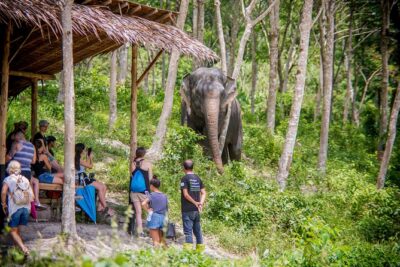
A Morning with the Elephants at Phuket Elephant Sanctuary
Read our review →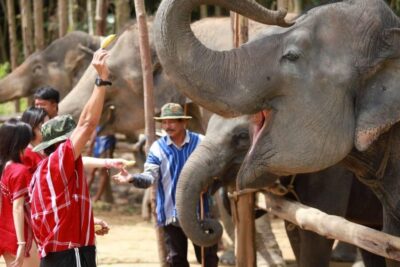
Elephant Experience with Lunch or Dinner and Pickup
Read our review →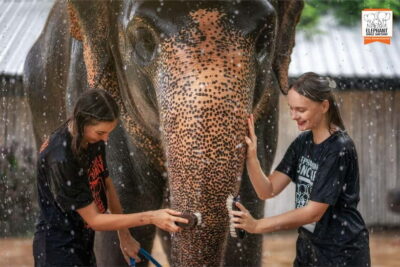
Elephant Jungle Sanctuary Feed and Shower Trip
Read our review →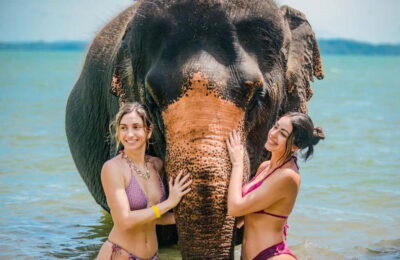
Beach walk with elephants, rain & care. 2.5 hours
Read our review →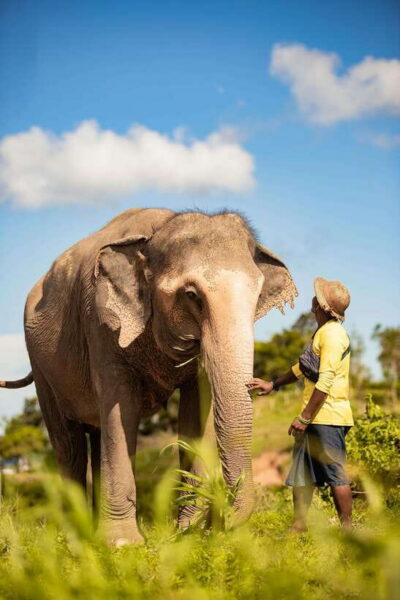
Bukit Elephant Park Sanctuary Walk and Feed Tour
Read our review →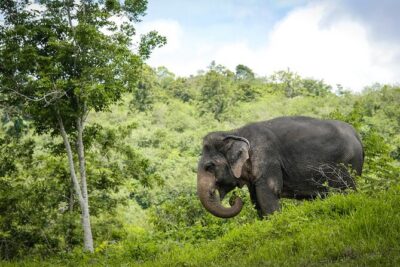
Browse the lists this tour appears in